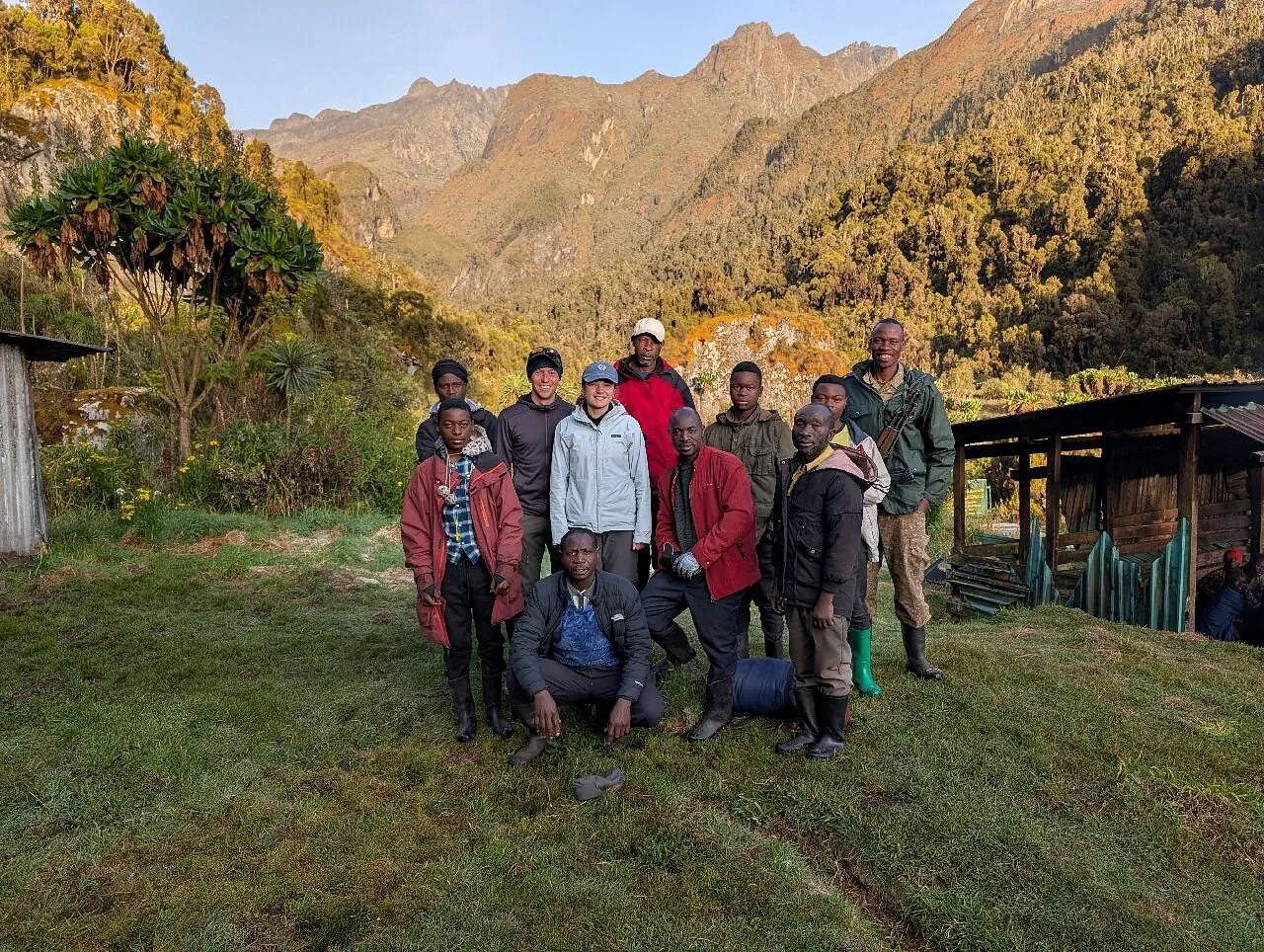
How many porters do you need for a Rwenzori trek? We include regulations, weight limits, minimum team sizes, and the case for responsible tourism. Expert guide.
Of all the questions that arrive in our inbox after a booking is confirmed, this one appears more consistently than almost any other. After the exhilaration of locking in dates and choosing a route, whether the 7-Day Central Circuit, the 8-Day Kilembe Trail, or one of the longer multi-peak expeditions, the practical mind kicks in and the arithmetic begins. Could you please let me know how many people will be accompanying me on the walk? What does each one carry? Do I really need all of them? And, with equal parts hope and guilt, the follow-up: can I reduce the number to save money?
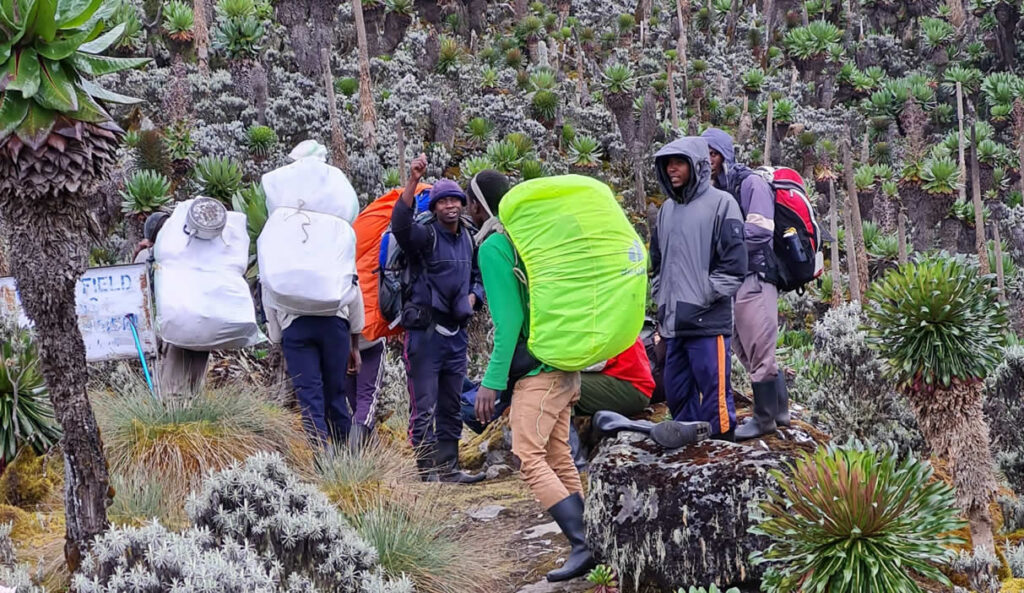
It is a completely fair question, and it deserves a complete and honest answer. This guide covers every aspect of the Rwenzori porter system: the regulatory framework, the weight limits that underpin it, the minimum requirements by route and group size, and the ethically important case for not treating porter numbers as a cost to be minimised. If you are planning a Rwenzori trek at any altitude, on any trail, understanding this system before you arrive is not just logistically useful. It is, I would argue, an essential part of preparing to travel responsibly in one of the most economically vulnerable and ecologically sensitive mountain communities in East Africa.
The Rwenzori Porter System Is Unlike Anything Else in East Africa
Before any numbers make sense, you need to understand why the Rwenzori Mountains demand a support team at all and why that team is larger and more specialised than what most trekkers encounter on other African mountains.
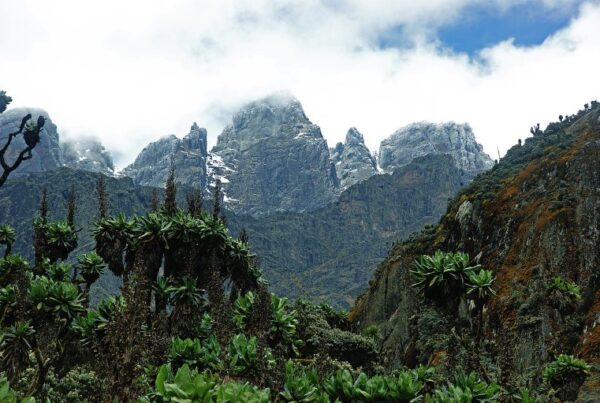
The Rwenzori is not a volcano. It is a mountain range created by tectonic uplift, made up of a mix of ridges, deep valleys, swamps, steep cliffs, and icy areas at the top, which makes it much more complicated than the simple, cone-shaped shape of Kilimanjaro or the easier rock paths of Mount Kenya. The Central Circuit Trail passes through five distinct vegetation zones, starting with tropical rainforest and bamboo at the base and leading to the extraordinary Afro-alpine zone of giant heather and giant lobelias above 3,500 metres, before entering glaciated terrain above Elena Camp at 4,541 metres on the final approach to Margherita Peak (5,109 m). The Kilembe Trail navigates its own entirely distinct set of ecosystems, approaching from the south through the Nyamwamba Valley.
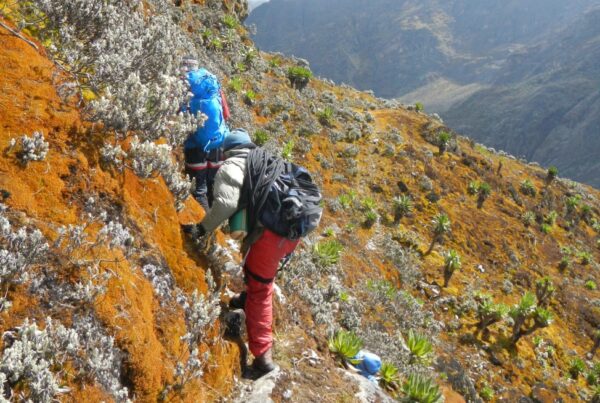
What both routes share is their physical character: they are extraordinarily wet, consistently steep, and technically demanding for the first-time visitor. The Bigo Bog on the Central Circuit, a vast, waterlogged valley that trekkers cross on elevated wooden boardwalks, is unlike anything most mountaineers have encountered. The mud is not an inconvenience; it is a defining feature of the experience. Trekking poles vanish to the ankle in places. Rain falls at altitude not as a passing shower but as a sustained, day-long event. Temperatures at Elena Camp can drop to -10°C overnight. This is the environment your porter team operates in every single day, carrying loads that make your progress possible while managing terrain that humbles experienced alpinists.
GUIDE INSIGHT:I have trekked these mountains hundreds of times, and I can tell you that the sections between John Matte and Bujuku Hut in heavy rain are among the most physically demanding kilometres I know. Your porters navigate them with gear on their backs and make a return journey the same afternoon. That context matters when you think about team size. |
This terrain is one reason the porter system here is not merely a service amenity. It is a technical support infrastructure that sits at the intersection of your safety, your comfort, and the local economy of the Bakonzo community, the indigenous people who have lived on and around these mountains for centuries. Our detailed overview of Rwenzori Mountains National Park covers the full regulatory and ecological context of the mountain environment.
Who Regulates the Rwenzori Porter System?
The regulatory authority over trekking within Rwenzori Mountains National Park rests with the Uganda Wildlife Authority (UWA). All trekking parties entering the park must be accompanied by a registered park guide; this is non-negotiable and enforced at both the Nyakalengija trailhead on the Central Circuit and the Kilembe entry point on the southern approach. Solo trekking in any form is prohibited. This requirement exists not just as a formality but because the navigation complexity, weather unpredictability, and genuine remoteness of the mountain make unsupported travel genuinely dangerous.
Porters, while technically separate from the guide requirement in the written regulations, are practically mandatory for any multi-day expedition. Beyond the UWA framework, Rwenzori Trekking Services (RTS), which manages trail operations and hut infrastructure on the mountain in partnership with UWA, operates its own standards for porter employment, load limits, and crew welfare. Any licensed operator organising treks in the mountains works within this framework, which sets the minimum crew composition and load limits that govern every expedition.
The practical result is that every Rwenzori expedition will include, at minimum, a registered lead guide, a cook, and at least one porter per trekking member for most standard itineraries. Summit expeditions and longer multi-peak routes require additional specialised crew members, including an assistant guide for technical sections and a rescue porter for all glacier-zone bids.
IMPORTANT:No porter on the Rwenzori should be carrying more than 18–20 kg of expedition equipment. This limit protects their welfare and ensures safe progress on technically demanding terrain. If you are quoted a price that seems to depend on fewer porters carrying heavier loads, that is a welfare and safety concern, not a bargain. |
Standard Porter-to-Trekker Ratios: What to Expect on Each Route
The porter allocation for your specific trek depends on three variables: the route you are taking, the number of trekkers in your party, and the objectives you are pursuing (lower-altitude trekking versus a full summit bid to Margherita Peak or a multi-peak expedition). The table below summarises the standard team composition you can expect across our main itinerary types.
| Route / Itinerary | Trekkers | Guides | Cook | Porters |
| 3-Day Mahoma / 4-Day Mutinda | 1–2 | 1 | 1 (combo) | 1–2 |
| 6–7 Day Central Circuit (solo) | 1 | 1 | 1 | 2–3 |
| 6–7 Day Central Circuit (2–4) | 2–4 | 1–2 | 1 | 1 per trekker |
| 8-Day Kilembe Trail (solo) | 1 | 1 | 1 | 2–3 |
| 8-Day Kilembe Trail (2–4) | 2–4 | 1–2 | 1 | 1 per trekker + rescue |
| 13-Day Six-Peak Expedition (2) | 2 | 1+ asst. | 1 | 4–5 + rescue |
| 13-Day Six-Peak Expedition (4) | 4 | 1+ asst. | 1 | 4–6 + rescue |
Table: Standard team compositions. Actual numbers vary based on equipment weight and group kit.
For the shorter, lower-altitude routes, the 3-Day Mahoma Loop and the 4-Day Mutinda Loop, the support requirements are lighter. These routes avoid the technical upper mountain, making food logistics simpler and altitude exposure limited enough that full summit-support infrastructure is unnecessary. A solo trekker on the Mahoma Loop will typically have a guide, a cook/porter combination, and one additional porter depending on equipment load.
For the mid-length summit routes, the standard 7-Day Central Circuit, the 8-Day Kilembe Trail, and related itineraries like the 6-Day Weismann Peak trek or the 8-Day Cheptegei Peak route, the standard allocation is approximately one porter per trekker, plus the guide and cook. For a solo trekker, the allocation means a team of at least three to four people. For a group of four, the support team will typically number six to eight, including the lead guide, an assistant guide for technical sections, the cook, and four porters.
The larger multi-peak expeditions, particularly the 13-Day Six-Peak Expedition, which climbs Margherita on Mount Stanley, Mount Speke, Mount Baker, Mount Emin, Mount Gessi, and Mount Luigi di Savoia, require significantly more logistical support. For a group of two on a 13-day expedition, a total team of eight to ten people is common. The mathematical necessity, not padding, drives the team size, as each member carries a load allocated within the 18-kilogram weight limit.
What’s in Porter’s Load? Why 18 Kilograms Is Not Arbitrary
When most trekkers picture a porter, they imagine someone carrying a single backpack containing a trekker’s personal belongings. The reality is considerably more complex, and understanding it is key to grasping why the team numbers are what they are.
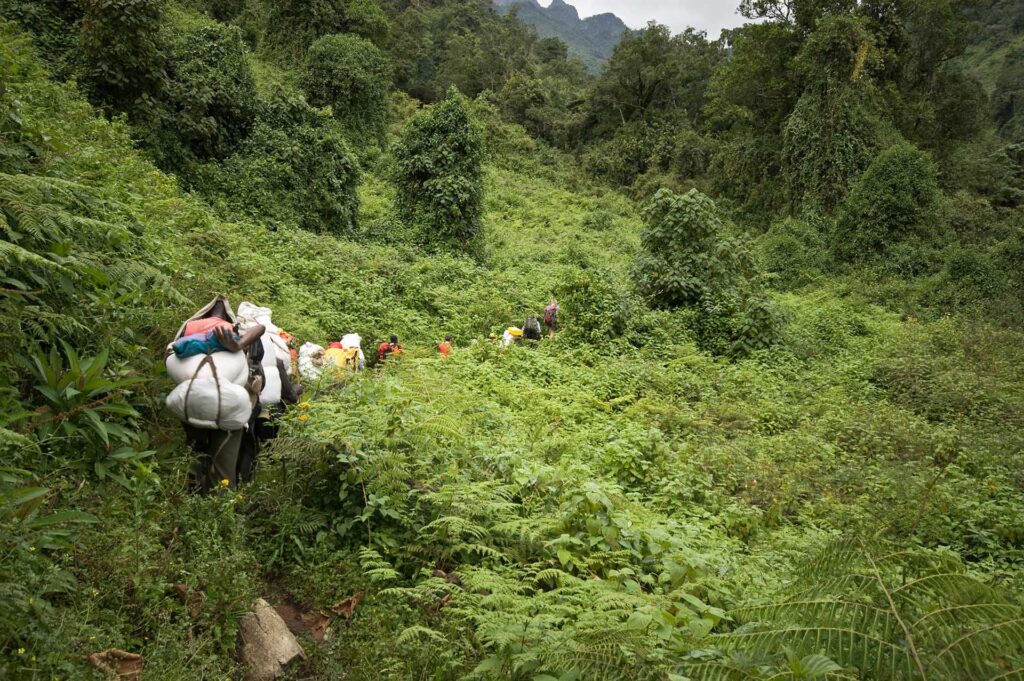
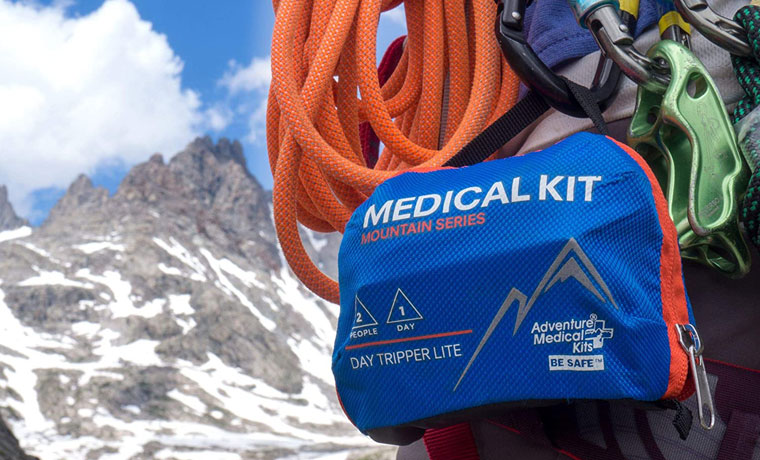
A porter on a Rwenzori summit expedition may be carrying any combination of the following: portions of communal camping gear including ground sheets, sleeping mats, or tent components where applicable; food supplies for multi-day sections of the route from a specific resupply point; cooking equipment including pots, gas canisters, and kitchen stores; communal safety and medical supplies including the expedition first aid kit and, in some cases, a lightweight stretcher component; and technical gear including ropes, ice hardware, or portions of the glacier equipment used on the final approach to the summit zone.
GUIDE INSIGHTOn a 7-day summit expedition for two trekkers, we calculate the total weight of all communal expedition equipment food for seven days, cooking kit, fuel, safety equipment, sleeping mats, communal shelter, and technical gear before allocating loads. The numbers are never guesswork. Each porter’s pack is weighed at Nyakalengija or the Kilembe office before departure. |
The 18-to-20-kilogram load limit per porter is not an arbitrary number. It is derived from occupational health principles applied to sustained load-carrying in alpine terrain. Carrying loads heavier than 18 to 20 kilograms in Rwenzori’s challenging terrain increases compressive spinal loading, knee joint stress, and fall risk non-linearly. Responsible operators enforce this limit not because the porters would refuse heavier weights, but because enforcing it is the right thing to do. Porter injuries on this mountain have real consequences for individual workers and their families, and the responsible operator’s job includes protecting the team that makes the expedition possible.
The Full Support Team: More Than Just Porters
The term ‘porter’ is sometimes used loosely to describe the entire Rwenzori mountain crew, but the support team on a serious Rwenzori expedition has a structured hierarchy with distinct roles that go well beyond load-carrying.
The Lead Guide
At the head of the team is the lead guide, a registered UWA guide with years of mountain experience, route knowledge, and direct responsibility for every safety decision made on the mountain. Our Rwenzori mountaineering guides have made the glacier crossing to Margherita dozens or hundreds of times. They read the mountain’s weather with the intimacy of someone who has spent more time at Elena Camp than in their own living room. On technically demanding routes, particularly the glaciated summit section of Mount Stanley and the upper approaches of the secondary peaks, the guide’s experience is not a convenience; it is the difference between safe movement and serious accident.
The Cook
The cook is a non-negotiable member of the team. Nutrition at altitude is not a minor detail; it is a physiological necessity. The caloric demands of sustained high-altitude trekking in cold, wet conditions are substantial, and the difference between a well-fed trekking party and a depleted one is often the difference between a summit and a retreat. As our medical guide to Rwenzori trekking explains, adequate nutrition is a key variable in maintaining physiological resilience at altitude. Our mountain cooks produce hot three-course meals in conditions that would frustrate a professional kitchen over gas burners in hut cooking areas or on open moorland, in rain, at altitude, after carrying a full load. You don’t realise how vital they are to the trip’s success until you consider what you would eat without them.
The Rescue Porter
On all full summit bids, the team composition includes a rescue porter, who is designated and equipped for rapid descent support in case of a medical emergency. Given that evacuation from the upper mountain can take twelve hours or more depending on weather and terrain, this provision is not paranoid. It is operationally essential. The acclimatisation guide for Rwenzori details the severity of altitude-related emergencies and why an early, assisted descent is the only definitive treatment for serious altitude sickness. Having a rescue porter in place is the mechanism that makes that response possible.
Can I Reduce the Number of Porters?
This query is the direct question, and it deserves a direct answer: within limits, yes, but those limits are narrower than most trekkers expect, and there are important reasons why responsible operators will decline to reduce below certain minimum thresholds.
Where Genuine Flexibility Exists
If you are an experienced mountaineer travelling with a genuinely minimal personal kit and are willing to carry your own pack throughout the trek, there may be an argument for a slightly reduced porter count on shorter, lower-altitude routes. For a solo trekker on the Mahoma Loop or the Mutinda Loop who carries their own gear and requires minimal shared equipment, the team can legitimately be leaner than for a pair of trekkers with full summit gear.
Similarly, for group departures where multiple trekking parties share communal infrastructure, cooking equipment, shared hut accommodation, and group food supplies, the per-person porter requirement is lower than for a fully private expedition. Joining a shared group departure is, in fact, the single most effective way to reduce the total cost of a Rwenzori trek without compromising on safety or porter welfare. Our guide to how much it costs to climb the Rwenzori covers the topic in full detail.
Where Flexibility Effectively Ends
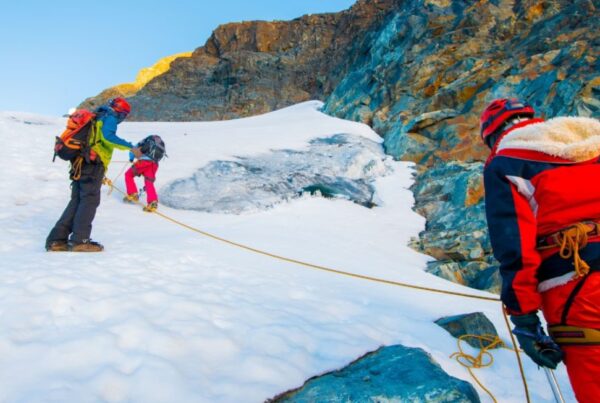
Any itinerary that includes a Margherita Peak summit bid requires a rescue porter as a minimum safety provision; this requirement is not negotiable for any responsible operator. Any itinerary carrying the technical gear required for glacier travel, crampons, ice axes, ropes, and helmets for each member of the party generates a fixed weight that must be divided across the team regardless of trekker preference. Any expedition where the route passes through the genuinely remote upper mountain requires adequate food and medical supplies that add irreducible weight to the collective load.
WARNING:If an operator agrees without question to reduce your porter count significantly below what your route requires, treat that as a signal about how they manage other aspects of expedition safety. The Rwenzori does not reward cost-cutting in its upper mountain zones. |
The frank answer to the question is almost always the same: you can ask, and we will provide you the honest breakdown of exactly why we are recommending the team size we are. That recommendation is based on what your route requires, what your kit weighs, what the mountains demand, and what your safety margin needs to be if something goes wrong at 4,500 meters.
The Responsible Tourism Case for the Full Porter Team
There is a dimension of this question that goes well beyond logistics, and it is one that deserves honest articulation rather than being buried in a footnote. The Rwenzori Mountains attract roughly 1,000 to 1,500 trekkers per year, a fraction of the visitor numbers seen on Kilimanjaro or in Uganda’s more famous gorilla trekking circuits. This means that the economic footprint of each individual trek is proportionally more significant than almost anywhere else in East African mountain tourism.
Porter employment on the Rwenzori is one of the primary sources of formal, monetised income available to the Bakonzo community, the indigenous mountain people who have inhabited the valleys and slopes of the Rwenzori for generations. Every porter employed on your expedition is a family member whose income from that week contributes to school fees, healthcare access, and food security for dependents at the mountain base. The work is physically demanding and the mountain conditions are genuinely harsh; the porters who carry this expedition infrastructure do so because this is how they support their families in a remote region with limited economic alternatives.
TIP:A 10% share of Rwenzori Trekking Safaris’ proceeds from each expedition goes directly to supporting Bakonzo community projects, including orphans, schools, and homes. But the employment of a properly sized porter team is the more immediate economic mechanism on the ground. |
Against this backdrop, the question of reducing porter numbers is not just a safety question. It is a responsible tourism question. You are not choosing between economy and extravagance when you accept the recommended team size. You are choosing between contributing meaningfully to a mountain community and removing income from people who have few other options. For trekkers who want to understand how their spending flows through the mountain community, our overview of the true costs of a Rwenzori expedition explains exactly where every dollar of a trek fee is allocated.
Porter Welfare on the Rwenzori: What Responsible Operators Provide
Not all operators treat their porter teams equally, and as a trekker, you have both the right and the responsibility to ask how yours operates before you book.
Minimum standards that responsible operators follow on the Rwenzori include sticking to the 18-kilogram load limit for each porter; providing proper mountain clothing and gear for porters who work in the same cold, wet conditions that require high-quality gear from paying trekkers; ensuring enough food for the support team during the trip; paying fair wages that meet or exceed the rates set by trail operations; and offering basic medical support, including access to first aid. The hut system on both the Central Circuit at Nyabitaba, John Matte, Bujuku, Elena, Kitandara, and Guy Yeoman and the Kilembe Trail at Kalalama, Mutinda, Bugata, Hunwicks, and Margherita Camp includes designated cooking and rest areas for support teams, as detailed in our complete accommodation guide.
The International Porter Protection Group (IPPG) publishes global guidelines for mountain porter welfare that provide a useful independent benchmark. Responsible operators welcome questions about their specific practices. If the operator can’t or won’t explain how they equip, feed, and house their porter team, that silence is telling.
What Happens When Expeditions Are Under-Portered?
The consequences of an under-reported expedition are not abstract. When the porter-to-load ratio is insufficient, individual porters either carry loads above the safe threshold, which increases injury risk and slows team progress, or leave behind equipment that should have come up the mountain. Left-behind equipment might mean insufficient food at high altitude, a missing component of the medical kit, inadequate cold-weather gear for overnight camps above 4,000 metres, or the absence of safety equipment for the glacier. Inadequate equipment is not an inconvenience on a mountain where temperatures at Elena Camp drop to -10°C and the technical glacier approach to Margherita requires roped movement with ice axes and crampons. It is an expedition-ending problem and potentially a life-threatening one.
The Rwenzori also receives substantial rainfall at all altitudes; our complete weather guide covers the issue in depth, which means that the weight of wet gear, if not properly managed, can strain even a well-staffed team. Under-staffing compounds the wet-weather logistics challenge in ways that experienced operators anticipate and inexperienced ones do not.
Tipping Your Porter Team: A Practical Guide
The trek price does not include gratuities for the porter and guide team, which hold immense significance for the recipients. General practice is to budget approximately 8 to 12% of the total trek cost for gratuities, distributed across the entire team. You can review the full breakdown of Rwenzori trek costs and budgeting to understand how the gratuity fits into the overall expedition budget.
A practical framework: the lead guide, whose experience and decision-making are directly responsible for your safety and summit outcome, receives the most generous individual gratuity; the assistant guide and cook receive comparable but slightly lower amounts; porters receive a daily-rate gratuity, with approximately $10 per porter per day serving as a commonly used baseline. On larger groups, the per-person tip contribution is proportionally lower; for a solo trekker, the same total team receives the same gratuity regardless of your party size, which is worth accounting for in your personal budget.
Last night on the mountain, your guide will typically organise an envelope system. The group agrees on a total, the money is handed over, and the guide distributes it according to the team hierarchy. If you prefer to tip individuals directly, that is welcome; carry the appropriate denominations in USD or Ugandan shillings. This small logistical detail makes a meaningful difference to the people who have carried your expedition for days.
TIP:For trekkers planning extended multi-peak expeditions where the porter team has been with you for 10–13 days in genuinely demanding conditions, consider the generosity of the gratuity carefully. These are among the most skilled and hardest-working mountain professionals in East Africa. |
Frequently Asked Questions: How Many Porters Do I Need for the Rwenzori?
How many porters does a solo trekker need on the Rwenzori Central Circuit?
For a solo trekker completing the 7-Day Central Circuit to Margherita Peak, the standard team composition is a lead guide, a cook, and two to three porters, a total team of four to five people. This reflects the irreducible weight of food for seven days, shared safety equipment, cooking supplies, and technical glacier gear required for a summit expedition. The numbers often surprise first-time Rwenzori visitors accustomed to lighter-staffed mountains, but they are a direct consequence of what this particular route requires logistically, not a staffing excess.
Can I carry my own gear on the Rwenzori instead of hiring a porter?
You are welcome to carry your own personal pack, and many experienced trekkers do. However, carrying your personal bag does not eliminate the need for a porter team. The communal expedition equipment, food, cooking gear, safety equipment, technical gear, and medical supplies still need to be transported up the mountain. Carrying your pack changes whether an additional porter is needed for your personal kit; it does not reduce the core team required for the shared expedition infrastructure. On summit bids above Elena Camp, we also strongly advise against carrying a full personal pack, as conserving your energy for the altitude demands of the upper mountain, particularly the glacier section, is an important physiological priority.
What is the weight limit per porter on the Rwenzori?
The standard load limit per porter on the Rwenzori is 18 to 20 kilograms of expedition equipment, excluding the porter’s own personal gear. This limit is enforced by responsible operators and trail management to protect porter welfare and maintain safe load-carrying practices in technically demanding terrain. The limit is grounded in occupational health principles related to sustained load-carrying on steep, unstable mountain paths, and it is not negotiable on welfare grounds. Operators who accept loads above this threshold are compromising their staff.
Is it possible to reduce the porter team to lower the cost of a Rwenzori trek?
The porter team can be slightly reduced on shorter, lower-altitude routes such as the Mahoma Loop or the Mutinda Loop, where equipment requirements are less extensive and no technical summit gear is required. On full summit expeditions or multi-peak routes, the minimum team size is driven by genuine logistical requirements: food weight, technical gear, safety equipment, and the mandatory rescue porter provision. Operators who significantly understaff below these minimums are typically cutting safety infrastructure rather than genuine excess. If cost reduction is your priority, joining a shared group departure is the most effective and ethical route to a lower per-person cost.
Why are Rwenzori porter teams sometimes larger than Kilimanjaro teams?
Kilimanjaro and the Rwenzori operate on fundamentally different logistical models. Kilimanjaro is a high-volume mountain with well-established base camp infrastructure and a trekking industry refined over decades. The Rwenzori receives a fraction of Kilimanjaro’s annual visitors, roughly 1,000 to 1,500 per year compared to over 50,000, and operates in vastly more demanding technical terrain: waterlogged bogs, dense vegetation, steep unstable paths, and complex multi-massif navigation. The weight of technical equipment required for glacier-zone operations on the Rwenzori, crampons, ice axes, ropes, and helmets, also exceeds what is needed on non-technical Kilimanjaro routes. The support team is larger in proportion to what the mountain genuinely demands, not in proportion to industry convention. Our article on why the Rwenzori is the best mountain hike in Africa explores this comparison in depth.
Are Rwenzori porters paid fairly?
Responsible operators pay wages in line with or above the rates set by trail management. Whether your operator adheres to these standards is a legitimate question to ask before booking. Beyond the base wage, gratuities form a significant portion of a porter’s income from any given trek, which is why the guidance on tipping in this article matters practically. The Rwenzori porter system, when managed responsibly, provides meaningful formal employment to members of the Bakonzo community in one of Uganda’s most economically remote districts. Our commitment to the full details of responsible employment is reflected in our allocation of 10% of all safari proceeds to support programs for the Bakonzo community. Our detailed cost guide explains how expedition fees are distributed through the mountain economy.
Do Rwenzori porters have proper equipment and shelter during the trek?
They should, and with responsible operators, they do. Porters sleep in the designated staff areas within each mountain camp’s hut system, the same network of camps that trekkers use throughout the expedition. Responsible operators provide adequate mountain clothing, including waterproof outer layers and appropriate footwear, as well as food provisions throughout the trek. A porter working at 4,500 meters in driving rain needs the same quality of weather protection as a paid trekker. When evaluating operators, it’s crucial to consider how they manage porter equipment. Operators who leave porters under-equipped while marketing premium experiences to clients fall well below the ethical standard that this mountain community deserves.
Could you please explain what a rescue porter is and whether it is necessary for me to have one?
A rescue porter is a designated porter who, in addition to their regular load-carrying role, is briefed and equipped to assist in the rapid emergency descent of a trekker who develops altitude sickness, hypothermia, or another serious condition in the upper mountain zones. Given that evacuation from the area above Elena Camp or Margherita Camp can take twelve hours or more depending on weather and terrain, as explained in detail in our complete medical guide, having a capable team member designated for this role before an emergency arises is an operational necessity rather than an optional extra. All the summit bids we organise include this provision.
Ready to Plan Your Rwenzori Expedition?
The porter system is, in the deepest sense, the mechanism that makes the Rwenzori accessible while keeping it meaningful. These are not background figures in your story. They are the people who know every slippery root on the Bigo Bog, every reading of the sky above Elena Camp, and every turn in the Bujuku Valley in cloud and sunshine. They make your expedition possible, and they deserve to be properly employed, properly equipped, and properly compensated for it.
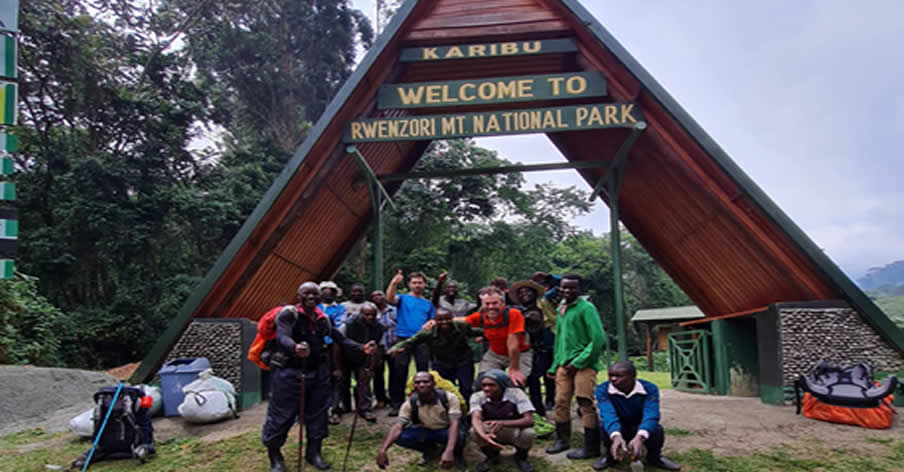
Get in touch with our team today. We will give you a transparent breakdown of the support team required for your specific itinerary, explain every cost, and make sure that when you walk into the Mountains of the Moon, every person walking with you has exactly what they need.